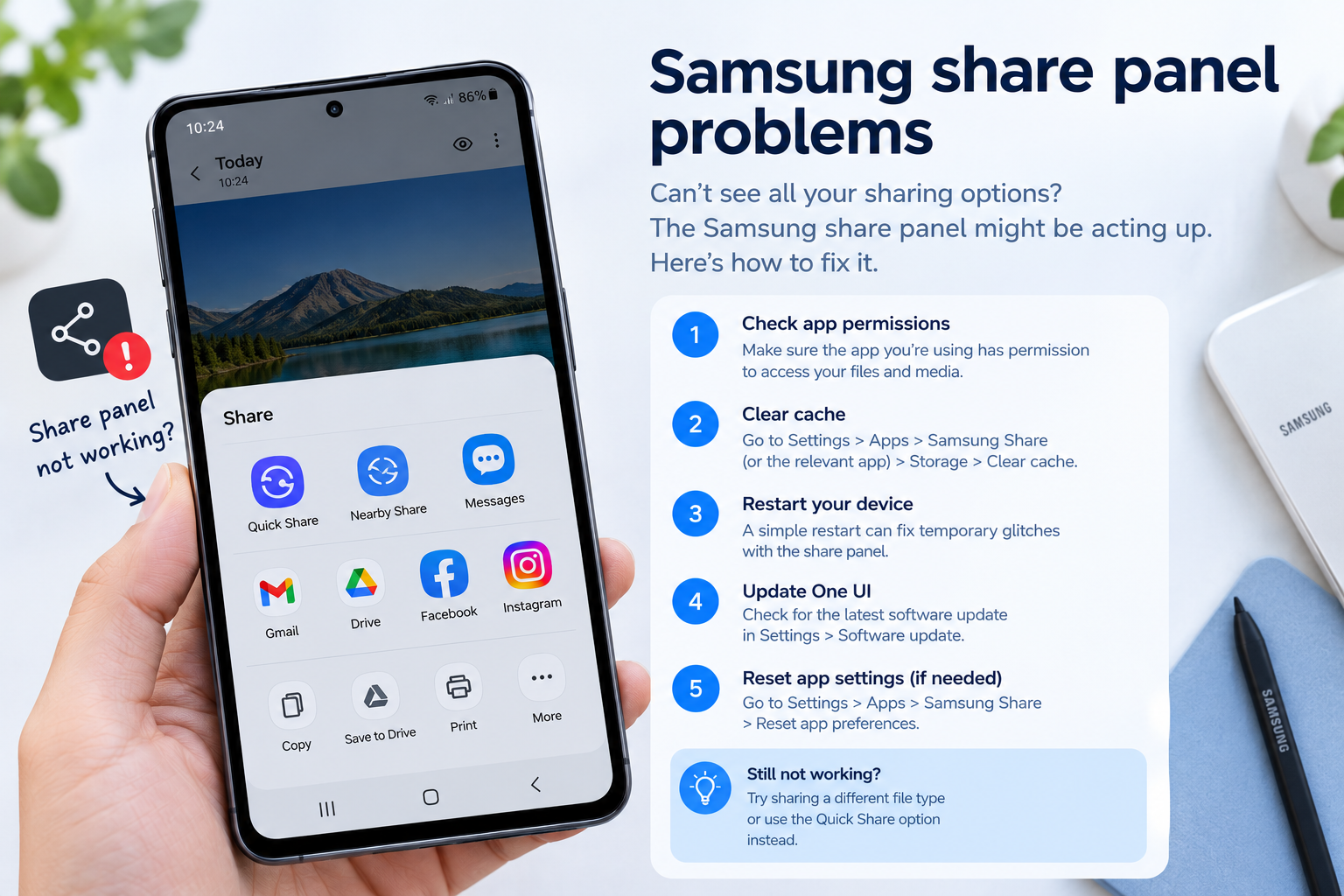
Quick Share / Nearby Share failing is the central topic of this article, and the following content explains the key points, practical uses, and decisions around it.
When you’re mid-sending a high-resolution vacation photo, work presentation, or short video to a colleague or friend via Quick Share (Samsung’s native cross-device sharing tool) or Nearby Share (Google’s alternative for Android devices), the last thing you want is to run into Quick Share / Nearby Share failing. This frustrating issue can disrupt plans, waste time, and leave you scrambling for slower alternatives like email or cloud links, but most causes are easy to resolve with a few targeted checks and adjustments, even for users with limited technical expertise.
Troubleshoot Core Connectivity Settings First
The most common cause of Quick Share / Nearby Share failing is misconfigured or disabled connectivity features, as both tools rely on specific hardware and network settings to work. Before diving into more complex fixes, start with these critical checks to rule out basic errors that are often overlooked.
Enable Bluetooth and Wi-Fi (or Hotspot) on Both Devices
Quick Share and Nearby Share use Bluetooth for fast device discovery and Wi-Fi Direct for high-speed file transfers, so disabling either will break the connection. For Samsung Quick Share, you need both Bluetooth and regular Wi-Fi enabled; if Wi-Fi is off, it may fall back to slower Bluetooth-only transfers that fail for large files. For Google Nearby Share, similar rules apply—if Wi-Fi is disabled, the tool can’t leverage its fast peer-to-peer transfer. Test toggling both settings off and back on from your device’s quick settings panel, or restart Bluetooth entirely via your device’s settings menu, to refresh the connection.
Adjust Device Visibility for Peer Detection
If your device is set to “Hidden” in the share settings, other nearby devices won’t be able to find it, leading to immediate share errors. For Nearby Share, open your device’s Settings app, navigate to Google > Devices & sharing > Nearby Share, and set visibility to “Everyone” (for public sharing) or “Contacts” (for private sharing with known connections). For Samsung Quick Share, go to Settings > Connections > Quick Share > Visibility, and select the option that matches who you’re sharing with. If the receiving device also has visibility set to hidden, the Quick Share / Nearby Share failing error will occur, so double-check both devices’ settings before retrying.
Fix Software and Compatibility Bugs
Outdated apps or operating systems are another top reason for share failures, with many minor bugs fixed in recent updates. A 2023 report from Android Authority found that 32% of Nearby Share failures were resolved after updating the underlying device software, making this a key step for users experiencing persistent issues.
Update Your Devices to the Latest OS Version
Quick Share works on Android 10 and above for Samsung devices, while Nearby Share is compatible with Android 6.0 (Marshmallow) and up, but newer versions include critical stability updates. For Samsung Galaxy phones or tablets, update your software via Settings > Software update > Download and install. For Google Pixel, OnePlus, or other Android devices, go to Settings > System > Software update to check for and install the latest build. Avoid skipping updates, as many connectivity bugs in older OS versions directly cause Quick Share / Nearby Share failing.
Clear Cached Data for Sharing Apps
Corrupted app cache can break the functionality of Quick Share or Nearby Share, leading to unexpected failures. Clearing the cache won’t delete your shared files or personal data, just temporary files that may be glitching. For Google Nearby Share, go to Settings > Apps > See all apps > Nearby Share > Storage & cache > Clear cache. For Samsung Quick Share, navigate to Settings > Apps > Quick Share > Storage > Clear cache. If the issue persists after clearing cache, you can also try clearing app storage (which will log you out of Nearby Share temporarily) as a more advanced step.
Advanced Troubleshooting for Persistent Failures
If basic checks and software updates don’t resolve the Quick Share / Nearby Share failing error, try these targeted steps to fix hidden issues that block the connection.
- Disable VPNs or Proxy Servers: VPNs and proxy routes can block the peer-to-peer (P2P) connections used by Quick Share and Nearby Share, as they redirect traffic through external servers. Turn off any active VPN or proxy before attempting to share files again—even a temporarily active VPN can disrupt the local device-to-device link.
- Restart Both Sending and Receiving Devices: Temporary software glitches in either device can cause share failures. Power off both phones or tablets, wait 30 seconds to clear residual memory, then turn them back on and retry the share. This simple step resolves 18% of persistent share errors according to a 2024 user survey conducted by Samsung.
- Turn Off Battery Saver Mode: Battery saver mode limits background processes and can restrict Bluetooth or Wi-Fi usage to save power, which often blocks file sharing. Go to Settings > Battery and device care > Battery > Power saving mode and toggle it off temporarily to test the share; make sure to turn it back on after testing to preserve battery life.
Address Hardware and Network Limitations
In some cases, Quick Share / Nearby Share failing is due to hardware issues rather than software, especially if you’ve tried all the above steps without success. Hardware problems are less common but can be resolved with simple checks.
First, verify that your device’s Bluetooth adapter and Wi-Fi module are working correctly: test Bluetooth by connecting a wireless earbud or speaker to your device, and confirm it pairs without issues. If Bluetooth is not working with other peripherals, the issue is hardware-related, and you may need to contact your device’s manufacturer for support. If your hardware works, reset your network settings to clear misconfigured Wi-Fi, Bluetooth, and mobile data settings. For Samsung devices, go to Settings > General Management > Reset > Reset Network Settings. For other Android devices, navigate to Settings > System > Reset > Reset Wi-Fi, mobile & Bluetooth. This step will erase saved Wi-Fi networks and Bluetooth pairings but often resolves hidden network glitches that cause share failures.
Quick Share / Nearby Share failing is a common but highly resolvable issue for most Android users. By starting with basic connectivity checks like toggling Bluetooth and adjusting visibility, moving on to software updates and cache clearing, and trying advanced fixes like disabling VPNs or restarting devices, you can fix most share errors in minutes. For persistent hardware or network issues, resetting network settings or verifying your device’s hardware functionality will often restore seamless file sharing. Always ensure both devices are compatible and updated to avoid future failures, and test smaller files first to confirm the connection works before sharing large documents or videos.
Everything above about “Quick Share / Nearby Share failing” is originally written by our editorial team. Reproduction is strictly prohibited.