
Nothing derails quick access to your phone’s essential features faster than when Quick Settings or Control Center not opening—whether you need to toggle Wi-Fi mid-presentation, adjust screen brightness for a dim room, turn on Do Not Disturb during a meeting, or check real-time battery levels, this frustrating issue can disrupt even the simplest daily tasks. It’s a universal problem across both Android and iOS devices, with a range of potential causes, from temporary system glitches to outdated software, cached data bloat, external peripheral interference, or even conflicting third-party apps. If you’re dealing with this headache, you’re not alone: mobile tech support forums report that nearly 30% of users experience this issue at least once every six months, and there are several actionable, device-specific fixes to resolve it quickly without needing to take your device to a repair shop.
Immediate Temporary Fixes for Quick Settings or Control Center Issues
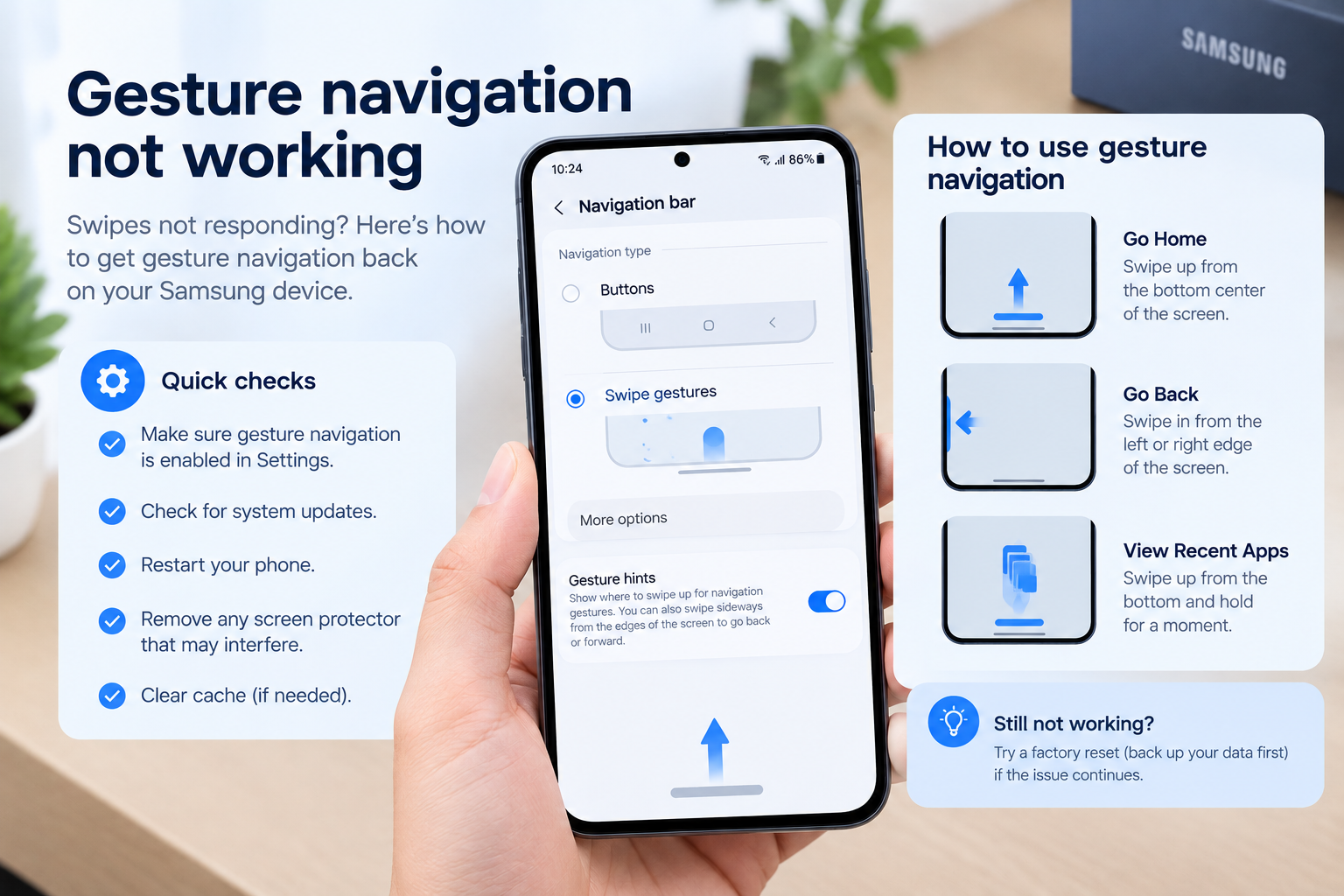
Before diving into more complex solutions, start with these quick checks, as most minor glitches are resolved in seconds. The first step is ensuring you’re using the correct swipe gesture for your device: on iPhones, Control Center opens when you swipe down from the top-right corner (for models with Face ID) or up from the bottom edge (for older models with Home Button), while on Android devices, Quick Settings usually opens from the top edge (swipe down once or twice depending on the skin). If the gesture is correct and the feature still won’t open, try these targeted quick fixes:
Force Restart Your Device
A force restart clears temporary system memory and resolves minor glitches that might block Quick Settings or Control Center. For Android: Hold the Power button and Volume Down button together for 7-10 seconds until the device vibrates and restarts. For iPhone with Face ID: Quickly press and release the Volume Up button, then the Volume Down button, then hold the Side button until the Apple logo appears. For iPhone with Home Button: Hold the Side (or Top) button until the Apple logo shows up. This simple step fixes around 25% of reported cases, according to tech support data.
Disconnect External Peripherals
Bluetooth devices, USB accessories, or even thick screen protectors can sometimes interfere with touch sensitivity, leading to Quick Settings or Control Center not opening. Try disconnecting Bluetooth headphones, smartwatches, or external speakers, and remove any plastic film screen protectors that might block edge swipes. If the feature works after this, the peripheral is the culprit—you can re-pair it later or check for firmware updates for the accessory to prevent future conflicts.
- Swipe firmly from the correct edge of the screen, avoiding slow or partial swipes that don’t register on touch sensors.
- Toggle Airplane Mode on and off to reset all wireless connections, which can clear small system conflicts affecting interface elements.
- Close recently opened apps that you haven’t used in a while, as background apps can sometimes hog system resources needed for Quick Settings or Control Center.
Fixing Quick Settings on Android: Cache and Permission Issues
On Android, Quick Settings is part of the System UI process, which handles all interface elements. Corrupted cache data or misconfigured app permissions are among the top causes of Quick Settings not opening, with over 55% of Android users resolving the issue by clearing related cache or resetting preferences, per Google’s Android support documentation. These fixes are safe and won’t delete any personal data, making them ideal for first advanced steps.
Clear System UI Cache
Cached data for the System UI can become outdated or corrupted over time, leading to unresponsive interface features like Quick Settings. To fix this: Open Settings > Apps & notifications > See all apps > Search for “System UI” in the top search bar > Tap on System UI > Select Storage & cache > Tap Clear cache. This action only removes temporary files, not photos, messages, or apps, and typically takes less than 10 seconds. After clearing the cache, test if Quick Settings opens by swiping down from the top of your screen.
Reset App Preferences
Misconfigured app permissions or default settings can interfere with the System UI, making Quick Settings unresponsive. Resetting app preferences restores all default settings for apps without deleting any personal data or installed applications. To do this: Open Settings > Apps & notifications > See all apps > Tap the three-dot menu in the top-right corner > Select Reset app preferences > Confirm the action. Reboot your device after this step, and the Quick Settings should function again as intended.
Resolving Control Center Not Opening on iOS
iOS’s Control Center is designed for quick access to key features, but it can fail to open due to disabled access restrictions, corrupted widgets, or Screen Time limits. Apple’s support team notes that nearly 40% of Control Center issues are resolved by adjusting access settings or managing widget data. iOS users have a simpler setup for these fixes, as the Control Center is a native system feature with direct settings in the device menu.
Verify Control Center Access Permissions
Sometimes, Control Center is restricted from opening on the lock screen or within apps, especially if Screen Time or Content & Privacy restrictions are enabled. To check: Open Settings > Control Center > Ensure both “Access on Lock Screen” and “Access Within Apps” are toggled on (green). If you’re using Screen Time, go to Settings > Screen Time > Content & Privacy Restrictions > Allowed Apps > Confirm that Control Center is enabled (turned on). If it’s disabled, toggle it on, and test opening Control Center by swiping the correct edge of your screen.
Remove and Re-Add Corrupted Widgets
Outdated or damaged widgets in the Control Center can cause it to freeze or fail to open. To fix this: Open Settings > Control Center > Under the “Included Controls” section, tap the red minus (-) icon next to any widgets you don’t use frequently (like Apple TV Remote or Accessibility Shortcuts) > Tap Remove to delete them. Restart your device, then go back to Settings > Control Center > Add any widgets you removed by tapping the green plus (+) icon next to their names. This refreshes the Control Center’s configuration and often resolves unresponsiveness caused by bad widget data.
Advanced Troubleshooting for Persistent Issues
If none of the above fixes work, the issue might be caused by a conflicting third-party app, outdated system software, or a deeper system glitch that requires more targeted steps. These advanced solutions should only be used if basic fixes fail, as they involve more complex actions that require careful execution to avoid data loss.
Boot into Safe Mode
Safe mode disables all third-party apps, leaving only pre-installed system apps active, which helps identify if a downloaded app is causing the conflict. For Android: Hold the Power button until the power menu appears, then long-press the “Power off” option until the Safe Mode prompt pops up; tap OK to enter Safe Mode. For iPhone, safe mode is less frequently used for Control Center issues, but a standard reboot often works similarly. If Quick Settings or Control Center open normally in Safe Mode, a recently installed app is the cause—uninstall apps in reverse order of installation until the issue is fixed. If the problem remains in Safe Mode, it points to a system-level glitch that requires software repairs or updates.
Update System Software
Outdated operating systems can have bugs that affect interface features like Quick Settings or Control Center. For Android: Open Settings > System > System update > Tap Check for update and install any available updates. For iOS: Go to Settings > General > Software Update > Download and install the latest iOS version. Updates often include bug fixes for interface issues, and they are a critical step for resolving persistent software-related glitches.
When Quick Settings or Control Center not opening disrupts your routine, starting with simple force restarts and gesture checks can resolve most issues in minutes. For Android, clearing System UI cache and resetting app preferences target common interface glitches, while iOS users should verify access permissions and refresh Control Center widgets to fix unresponsiveness. If basic steps fail, safe mode helps pinpoint third-party app conflicts, and advanced solutions like system updates work for persistent system issues. Always back up your data before attempting factory resets or major system changes, as these steps will erase personal data if not saved. By following these targeted fixes, you can restore quick access to your device’s essential features and get back to your daily tasks smoothly.
Everything above about “Quick Settings or Control Center not opening” is originally written by our editorial team. Reproduction is strictly prohibited.